
About the Project
JinShari aims to expand the Japanese Bonsai culture to the world
and pass it on to the next generation.
Our Core Principles
VISION
Fostering a culture where diverse perspectives on nature come together, and people and nature live in harmony.
MISSION
Building a Bonsai database and providing optimal aftercare.
VALUE
Transforming the tacit knowledge of Bonsai into explicit knowledge through AI technology.
Fostering a culture where diverse perspectives on nature come together, and people and nature live in harmony.
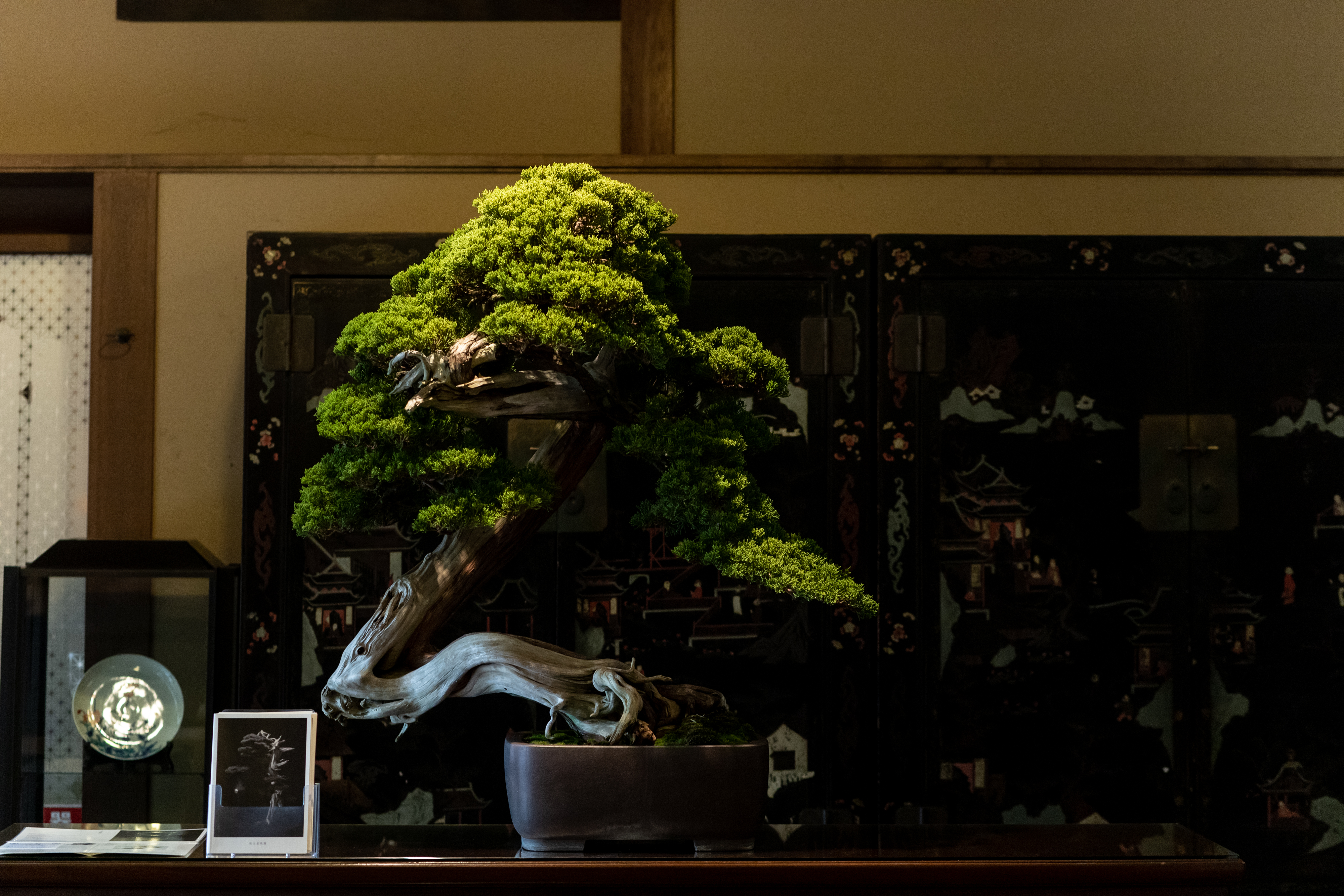
Today, bonsai is appreciated worldwide simply as “BONSAI.” Yet, the underlying views of nature and Japanese aesthetics that shape these living sculptures are not always fully understood. Bonsai embodies a distinct way of perceiving nature refined through Japanese culture—such as finding richness through subtraction, and quietly embracing the impermanence of life (mujo). Understanding this cultural context offers a doorway to experiencing bonsai on a much deeper level.
01.Delivering Experiences That Expand the Imagination
What we aim to deliver is not merely a tool for plant care, but an experience that expands your imagination through bonsai.
The true beauty of bonsai goes far beyond its visible silhouette. How you enjoy it is deeply personal—shaped by the vast landscapes you envision within a single tree, and the passage of time and personal stories you project onto it.
We use AI as a "translator" that unlocks intuition, making the tacit knowledge and nuanced perspectives of master practitioners accessible to everyone. Through daily care and dialogue, we create experiences that help you uncover the hidden potential within the tree before you, nurturing your own unique narrative and lasting attachment.
02.Cultivating a Culture Where Diverse Views of Nature Converge
Perceptions of nature and standards of beauty vary across different cultures and environments. Even at international gatherings like the World Bonsai Convention, people from different countries and regions bring distinct perspectives and aesthetic values to the art.
“Even within a single bonsai, countless perspectives and forms of beauty can coexist.” Sharing this realization fosters mutual understanding, creating connections rooted in respect for one another’s cultures.
When diverse views of nature intersect, new ways to enjoy bonsai emerge. In turn, the connections between people, and between humanity and nature, become even richer. Through bonsai, we are nurturing a cultural exchange that bridges diverse worlds.
Our Relationship with Bonsai
Bonsai goes beyond the realm of a mere hobby; it is deeply connected to a "lifestyle" itself.
Checking its condition every morning, entrusting its care to someone reliable when leaving home, and naturally thinking of tree shapes when walking along a mountain path. We believe Bonsai offers an experience where life becomes richer with it at the center—from everyday perspectives to how we connect with people.
The Charm of Bonsai as We See It
In a modern world where everything is consumed at high speed, we find unprecedented value in the experience of nurturing and appreciating a single existence over decades.
Rather than ending with temporary, superficial stimulation, taking many years to converse, interpret, and grow together. That is exactly where a rich time exists that cannot be obtained anywhere else.
Because we live in a rapidly changing modern era, touching an existence that lives longer than ourselves—something that has continued for a long time—we are convinced that it will become an unwavering spiritual pillar that supports your humanity and character.
What is JinShari?
DEFINITION
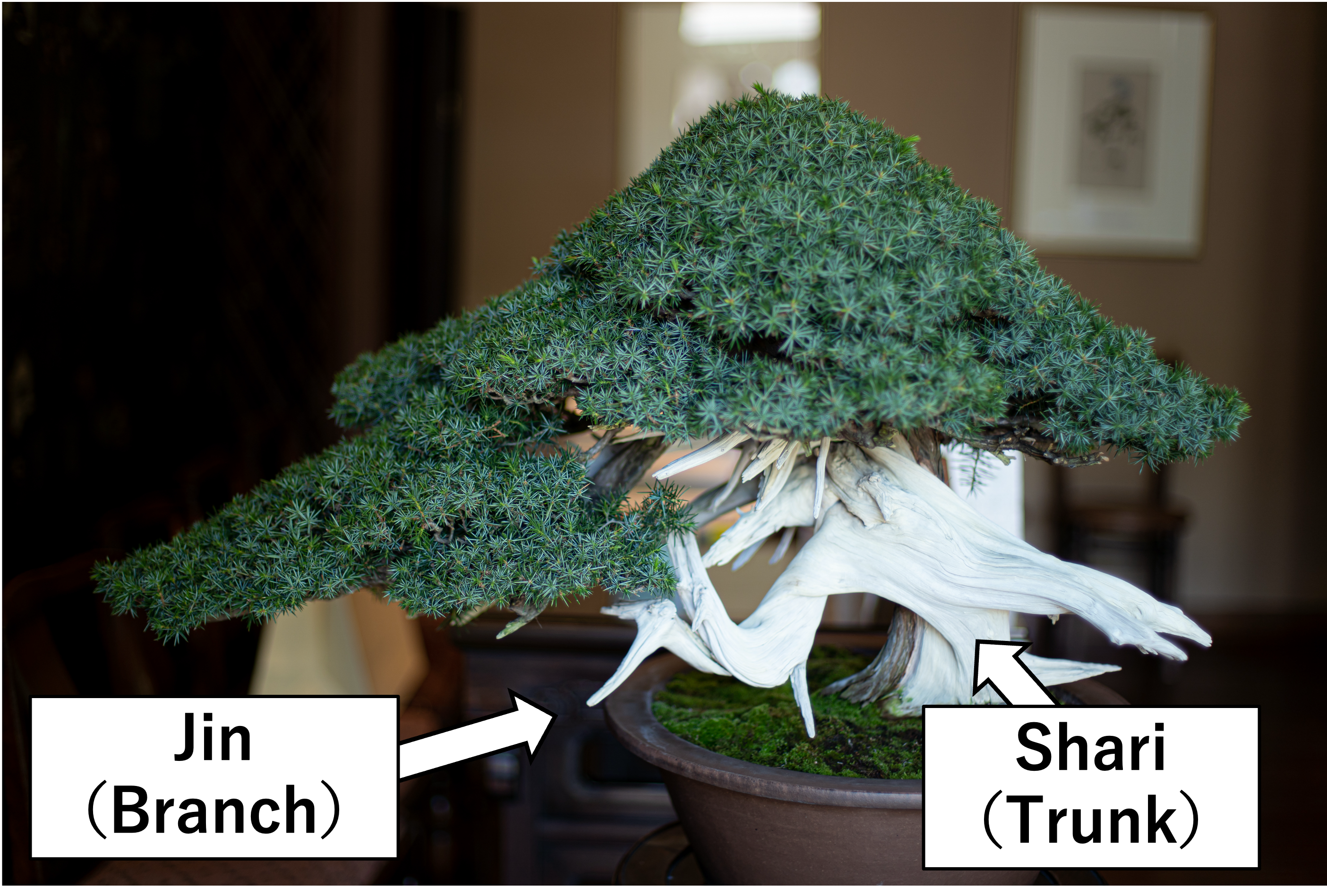
- Jin (ジン): The dead and bleached parts of a Bonsai's branch tips.
- Shari (シャリ): The dead and bleached parts of the trunk.
They are known by enthusiasts worldwide as concepts encapsulating the essence of Bonsai, such as life and death, the art of time, and sculptural beauty.
In the English-speaking world, both are often referred to as "Bonsai Deadwood", or simply Jin and Shari.
Why did the Japanese separate Jin and Shari?
One theory suggests that Jin represents "Kami" (God)—that is, pride, mystery, and awe toward nature. Shari means "Shari" (the remains of Buddha), which by extension points to the strength of living despite having faced numerous crises on the verge of death, finding the preciousness of life.
The Japanese find a "story" rather than merely "death", and we believe that this perspective is exactly the fascinating aspect of the interpretation (metaphor) of Japanese culture that we wish to deliver to the world.
Background Story
Today, Bonsai culture has crossed the borders of Japan and is loved by many around the world as "Bonsai". Active information exchange occurs daily within communities on social networks, and this passion continues to grow.
On the other hand, the domestic Bonsai industry faces challenges. For those newly starting out in Bonsai, the gateway into its profound world is not always wide open. The difficulty of cultivation management and the acquisition of a design aesthetic remain high hurdles for many beginners.
We hope to solve these issues through the fusion of technology and tradition. To support the Bonsai carefully grown by individuals, and to deliver the wisdom cultivated in Japan to the world. By doing so, we envision a future where this beautiful culture is passed down to the next generation without losing its essence, even as it changes form.
Current Status of the Project
JinShari is currently in the seed stage.
Together with a few enthusiastic members, we are proceeding with service development and
building a network with collaborators.
We hope to nurture this new challenge alongside everyone who loves Bonsai.